
Broken Garage Door Spring: Symptoms, Hazards & Repair
Heard a loud bang or is your garage door extremely heavy to lift? Understand the critical safety risks of snapped counterbalance springs and how our technicians safely replace them.
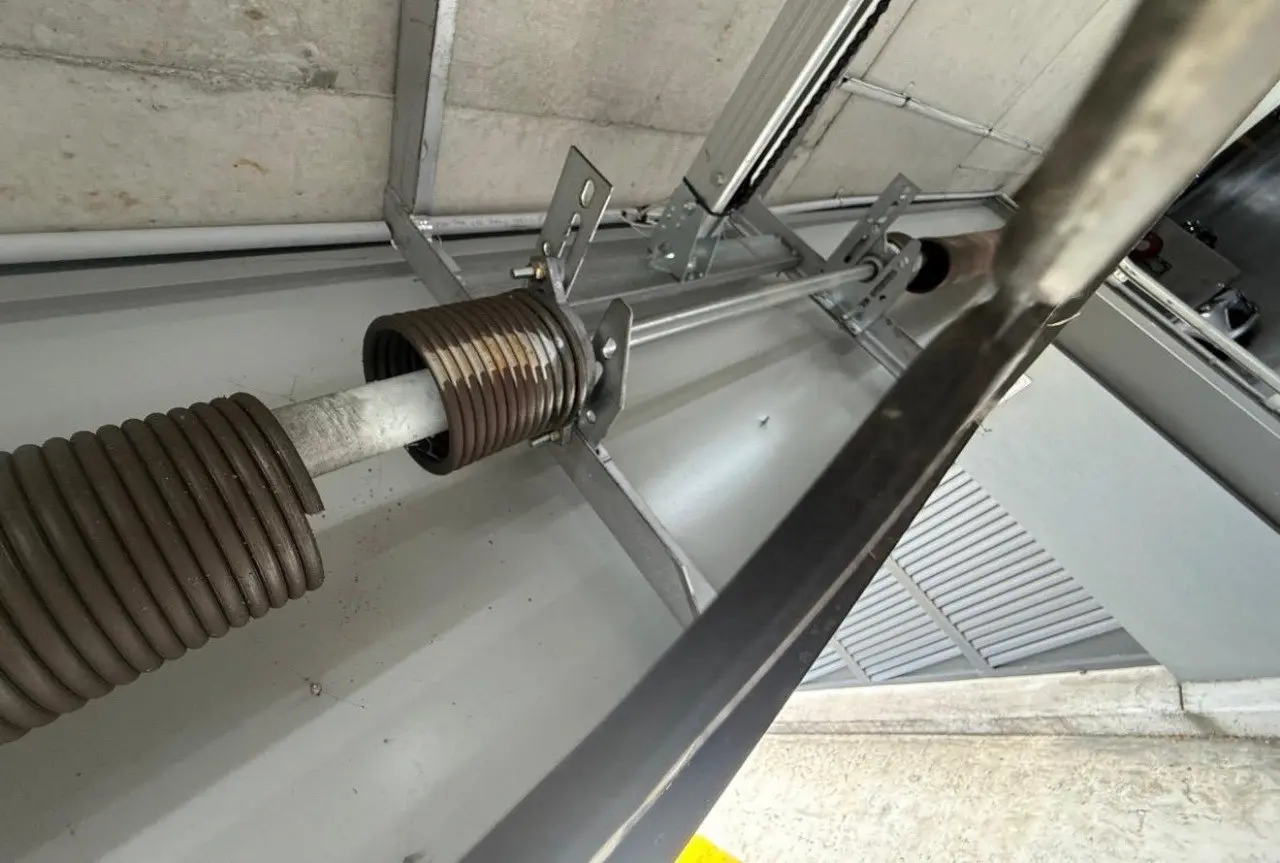
The Physics of Spring Breakage: Why Torsion Springs Snap
Garage door torsion springs are manufactured from high-tensile oil-tempered carbon steel wire. Every time the door cycles, the steel wire is twisted tightly and then unwound under high mechanical stress. Like bending a paperclip back and forth repeatedly, cyclic metal fatigue progressively creates microscopic crystalline fractures along the steel core.
Eventually, these microscopic fractures cross a critical threshold, and the spring shears instantaneously under full tension, releasing all stored kinetic energy in milliseconds with an explosive metallic bang. Once a spring is broken, your garage door loses all counterbalance, leaving the door's entire 80kg to 180kg deadweight resting inert on the floor.
Key Symptoms of a Broken Garage Door Spring
- A 50mm (2-Inch) Gap in the Overhead Coil: When a torsion spring snaps, the two halves contract away from each other. If you look at the horizontal steel bar above your closed garage door, you will clearly see a visible separation in the coiled wire.
- Loud Bang Heard Inside the House: Because torsion springs are anchored to the structural timber lintel or steel header beam of the home, the explosive sonic shockwave reverberates through the ceiling and walls, often mistaken for a firearm discharge or dropped roof tile.
- Opener Trolley Disconnects or Motor Strips: When you press the remote, the electric opener may move a few inches before cutting out on thermal overload, or you will hear a high-pitched grinding sound as the steel worm gear destroys the internal nylon drive gear.
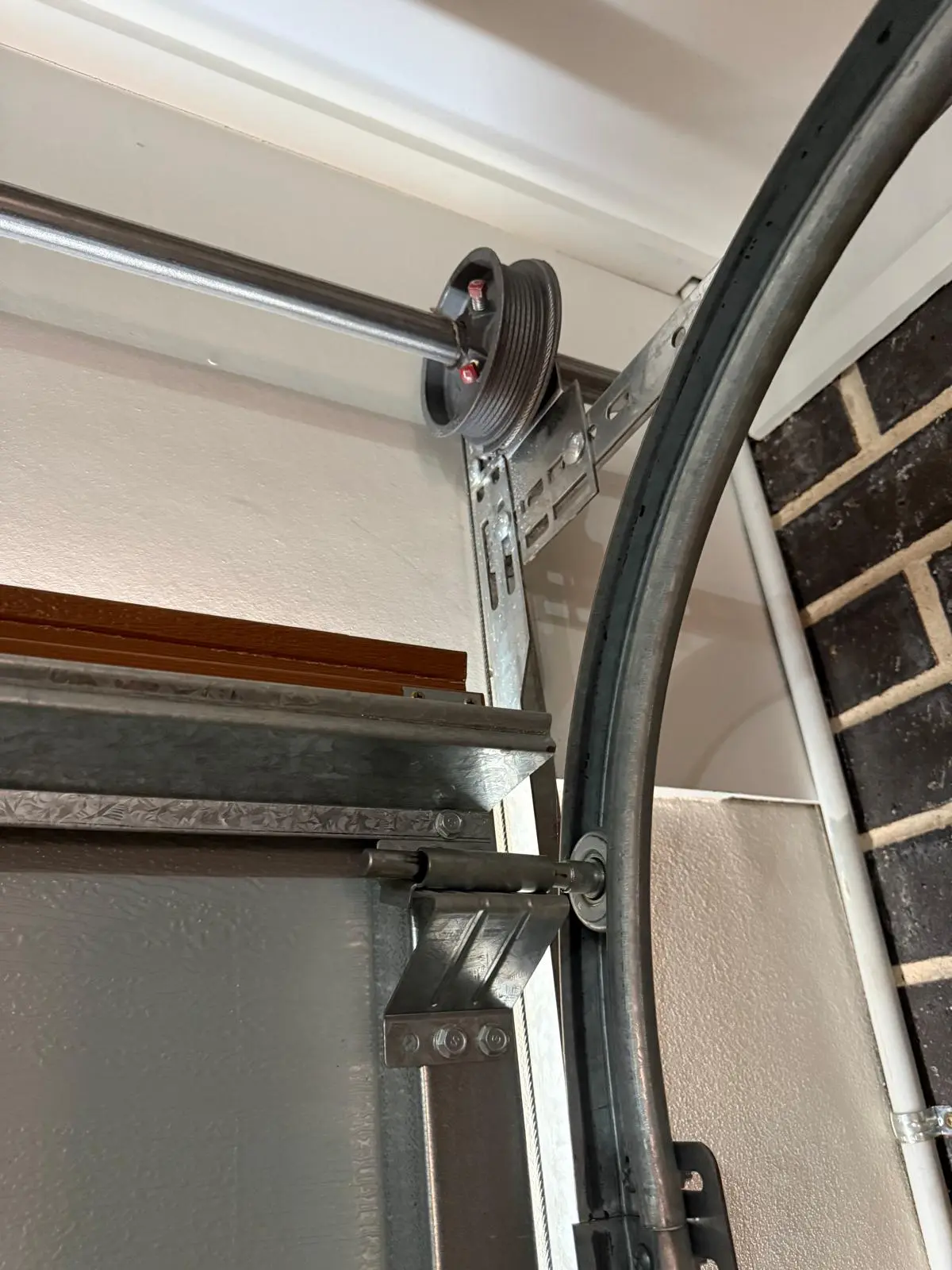
- Slacked, Loose Lifting Cables: Without spring tension pulling on the drums, the steel cables on the left and right sides will hang slack or slip off their cable drum spirals.
⚠️ Warning: Opener Motor Burnout Danger
Do not keep pressing your remote control button in hopes the door will "catch" and open. An electric opener motor is engineered only to assist a balanced door; it is incapable of lifting 100kg+ of unassisted deadweight. Repeated attempts will permanently burn out the motor's starting capacitor or strip the nylon drive gear, adding hundreds of dollars to your repair bill.
How We Measure & Calibrate Replacement Springs
Replacing a torsion spring is not a one-size-fits-all process. Installing the wrong spring wire gauge or diameter will cause the door to either slam down or fly open uncontrollably. Our technicians measure four critical parameters on-site:
- Wire Diameter (Gauge): Measured accurately using digital vernier calipers across 10 or 20 coils (e.g., .225, .234, .250 inch wire).
- Inside Diameter (ID): Typically 1.75 inches or 2.0 inches for domestic residential doors.
- Total Unwound Length: The exact active coil length required to deliver the calculated inch-pounds of torque per turn.
- Wind Direction: Determining Left-Hand Wound (red winding cone) vs Right-Hand Wound (black winding cone) to ensure correct rotation on the shaft.

Fully equipped mobile workshops carrying certified Australian torsion springs, replacement lifting cables, gate control circuit boards, and genuine Merlin & Grifco motors for fast same-day resolution.
Request Immediate Spring Replacement Dispatch
High-cycle Australian-made springs stocked in our Revesby mobile vans.
Frequently Asked Questions About Broken Springs
How many years does a garage door spring typically last?
Standard builder-grade torsion springs are engineered for roughly 10,000 cycles. For an average Sydney family operating their garage door 4 to 6 times a day, this translates to approximately 5 to 7 years of operational lifespan. Premium high-cycle springs (25,000 cycles) can easily deliver 12 to 18 years of service.
Can temperature changes cause a garage door spring to break?
Yes. Sudden cold snaps during Sydney winter mornings make steel more brittle and reduce elasticity, which is why a disproportionate number of fatigued springs shear during the very first cold morning cycle of the season.